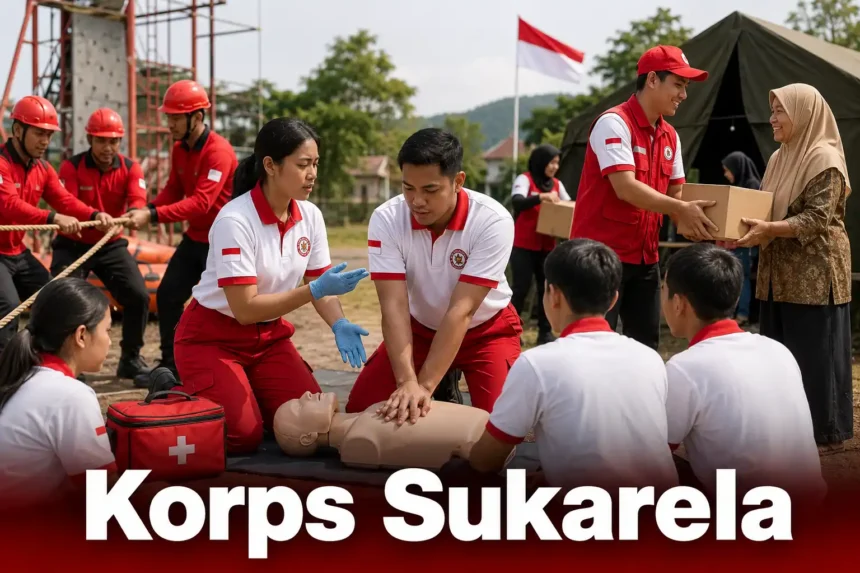
Korps Sukarela is the volunteer corps pathway within Palang Merah Indonesia, commonly shortened to KSR PMI. It is designed for people who want to serve in organized humanitarian work, not just occasional charity. Members usually join through a local PMI office or campus-based unit, then complete basic training before taking part in first aid, blood donor support, disaster response, public health education, and youth mentoring.
- Why KSR exists inside PMI
- Who can join the Korps Sukarela?
- Main types of KSR units
- What members actually do
- Training path before field service
- KSR, PMR, and TSR: the difference
- How to join Korps Sukarela
- What makes a strong KSR member
- Common challenges for new members
- Why KSR still matters in 2026
- Conclusion
- FAQs
For many searchers, the core question is simple: “Can I join, and what will I actually do?” The answer is yes if you meet the basic requirements, accept training, and are ready to work in a structured volunteer team.
Why KSR exists inside PMI
PMI does not run humanitarian work through enthusiasm alone. It needs trained people who can respond calmly, follow procedures, and support communities.
That is where korps sukarela fits. It gives adults a route into organized service. The unit helps PMI turn goodwill into practical action: blood donor events, health campaigns, disaster assistance, and readiness before a crisis.
KSR also matters because volunteer work can become chaotic when people act alone. PMI’s model gives members coordination, basic education, and a shared standard of conduct. The goal is to create reliable volunteers.
Who can join the Korps Sukarela?
The most common requirement is that members are adults, usually at least 18 years old. Some local PMI pages mention an upper age range, while others focus mainly on minimum age, education, willingness to train, and readiness to obey PMI rules.
| Requirement | What it means in practice |
| Age | Usually 18 or older, depending on local PMI policy |
| Residency | Indonesian citizens or foreigners living in Indonesia may be accepted in some areas |
| Education | Often at least a junior high school level or equivalent |
| Readiness | Physical and mental ability for training and duty |
| Discipline | Willingness to follow humanitarian principles and field instructions |
Students often join through a university unit. Non-students usually contact the local PMI city or regency office. The route may differ, but the expectation is the same: commit, learn, and serve under coordination.
Main types of KSR units
Not every member enters through the same door. In practice, there are two common unit types: headquarters-based units and university-based units.
Headquarters-based units
A headquarters unit is usually managed through the local PMI office. This route fits workers, community members, alumni, or anyone who is not joining through a campus organization.
Members may support city or regency-level programs, including blood donor events, emergency logistics, public service posts, and disaster preparedness activities.
University-based units
A university unit is commonly connected to a student activity organization focused on Red Cross work. This route fits students who want a structured volunteer experience while studying.
Campus units often combine training, student leadership, public service, and cooperation with the local PMI branch.
What members actually do
In the korps sukarela is not only about wearing a uniform at public events. The work is broader and often more demanding.
Typical activities include:
- Assisting voluntary blood donor programs.
- Providing first aid support at events or emergencies.
- Helping with evacuation during accidents, disasters, or conflict-related situations.
- Supporting public kitchens, temporary shelters, and relief distribution.
- Helping restore family links during disaster situations.
- Joining community-based health or disaster preparedness programs.
- Supporting peer education on youth health issues.
- Helping guide Palang Merah Remaja activities.
Some members later receive advanced or specialized training. Those who show readiness may be prepared for disaster response roles, including work connected to Satgana, PMI’s disaster preparedness and response capacity at local levels.
The real value of KSR is consistency. A person may enter because they want to help, but they stay useful because they keep training.
Training path before field service
People often underestimate the training side. That is a mistake. Humanitarian work has risks, and poor preparation can turn a willing volunteer into a burden.
A typical pathway starts with recruitment, orientation, and basic training. Basic training usually introduces PMI values, first aid, disaster response basics, teamwork, communication, and field discipline. After that, members may join routine activities under supervision.
The next stage is advanced training. This may cover deeper first aid, logistics, psychosocial support, evacuation support, shelter management, or community-based disaster risk reduction.
The smartest way to view korps sukarela is not as a membership label. It is a learning track. The more capable a member becomes, the more useful they are in the field.
KSR, PMR, and TSR: the difference
Many people confuse PMI volunteer categories. The difference is simple if you look at age, role, and skill base.
| PMI volunteer group | Main profile | Typical role |
| PMR | Youth members, usually school-based | Learning Red Cross values, health habits, friendship, and basic service |
| KSR | Adult volunteers, including students and community members | Organized humanitarian service after training |
| TSR | Volunteers with specific professional skills | Supporting PMI with expertise such as health, media, education, logistics, or other specialist work |
KSR sits between youth development and professional-specialist volunteering. It is mature enough for field service, but still open to ordinary people who are willing to train.
How to join Korps Sukarela
Start locally. PMI is organized through city and regency branches, so the correct contact point is usually your nearest PMI office. Students should also check whether their campus has a KSR PMI unit.
Use this practical path:
- Identify your nearest PMI branch or campus unit.
- Ask about recruitment timing, requirements, and documents.
- Attend orientation or information sessions.
- Complete basic training.
- Join activities under supervision.
- Keep developing skills through advanced training and field experience.
Do not treat registration as the finish line. The real test begins after training starts. If your only goal is a certificate, you will not last. If your goal is to become useful under pressure, KSR can shape you quickly.
What makes a strong KSR member
A strong member is not the loudest person in the room. The best volunteers are steady, teachable, punctual, and calm.
PMI work often involves public trust. Members need to respect confidentiality, avoid personal agendas during service, and follow instructions even when the situation is messy.
The most useful habits are simple:
- Arrive prepared.
- Keep first aid knowledge fresh.
- Communicate clearly.
- Know your limits.
- Respect field coordinators.
- Serve without expecting applause.
- Report tasks properly.
This is where many beginners fail. They romanticize volunteering, then disappear when training becomes repetitive or duty schedules become inconvenient. KSR rewards consistency more than excitement.
Common challenges for new members
The biggest challenge is commitment. Volunteer work competes with classes, jobs, family duties, and personal plans. A person may have sincere intentions but still struggle to show up.
The second challenge is emotional readiness. Disaster response, accidents, and public health work can expose volunteers to stress. Training helps, but members must also build patience and self-control.
The third challenge is understanding boundaries. KSR members help within PMI’s system. They should not perform tasks beyond their training, give unsafe medical advice, or act independently in a way that creates risk.
These challenges do not make the role negative. They make it serious.
Why KSR still matters in 2026
Public expectations for humanitarian service are higher now. Communities expect safer events, better disaster readiness, and volunteers who understand both field response and communication.
Climate-related disasters, urban emergencies, public health concerns, and large public gatherings keep increasing the need for trained local volunteers. Korps Sukarela remains relevant because it builds readiness close to the community.
For students, it can become a practical leadership school. For non-students, it offers a structured way to contribute time and skill without becoming a full-time humanitarian worker.
Conclusion
Korps Sukarela is one of PMI’s clearest entry points for adults who want to serve through organized humanitarian work. It is not random volunteering, and it is not only a campus activity. It is a trained volunteer pathway with real responsibilities.
The best next step is local verification. Contact your nearest PMI office or campus unit, check the current recruitment schedule, and ask what basic training is required. Join only if you are ready to be consistent. Good intentions are common. Reliable volunteers are rarer, and that is exactly why KSR exists.
FAQs
What is korps sukarela?
It is the KSR volunteer corps within Palang Merah Indonesia. Members join voluntarily, complete training, and support humanitarian activities such as first aid, blood donor programs, disaster response, and community service.
Is KSR only for university students?
No. Students often join through campus units, but non-students can usually ask their local PMI office about joining a headquarters-based unit.
Do KSR members get paid?
KSR is a volunteer role. Members may receive training, experience, assignments, or organizational recognition, but the role is based on voluntary service rather than salary.
What training do new members need?
New members usually complete basic training first. After gaining experience, they may take advanced or specialized training depending on local PMI needs and member readiness.
Can anyone join without medical skills?
Yes. Medical skills are helpful but not always required at the start. The key requirements are willingness to train, discipline, readiness, and commitment to PMI’s humanitarian work.