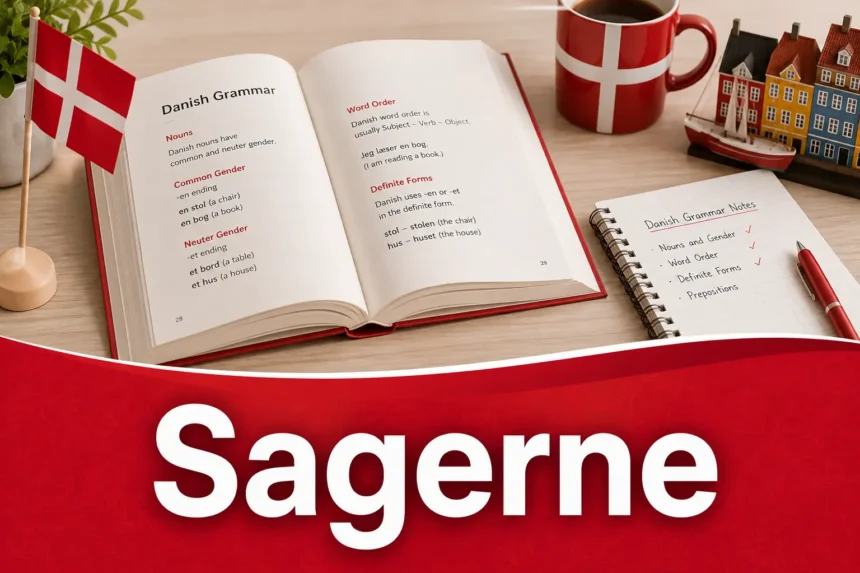
The Danish word sagerne means “the cases,” “the matters,” or “the issues” in English. It is not a brand, celebrity name, or special internet code. It is a normal Danish noun form that points to several specific things already known in the conversation. The exact English meaning depends on context. In law, it often means “the cases.” In work or administration, it may mean “the matters.” In casual speech, it can mean “the issues” or “the things being discussed.”
- What Sagerne Means in Simple English
- From Sag to Sagerne: The Grammar Behind the Word
- Why Context Changes the Translation
- Quick Translation Guide
- Why People Search for This Word in 2026
- Is It a Name, Brand, or Online Trend?
- Common Translation Problems
- How Learners Should Remember It
- Practical Examples in English Context
- Why This Word Matters for Translators
- Final Takeaway
- FAQs
What Sagerne Means in Simple English
The simplest way to understand Sagerne is to see it as a word for known matters. It does not refer to one random case or one new problem. It refers to several cases, matters, or issues that the speaker and listener already understand.
For example, if a Danish office team has been discussing three open files, someone may refer to them together with this word. In English, the natural translation could be “the cases,” “the matters,” or “the open issues,” depending on the situation.
That is why one fixed translation is not always enough. English often needs different words for different situations. Danish can use one compact form and let the context do the rest.
From Sag to Sagerne: The Grammar Behind the Word
To understand the term properly, start with the root word sag. In Danish, sag can mean a case, matter, issue, affair, task, or subject. The word changes form depending on whether it is singular or plural, and whether it is general or specific.
Here is the basic pattern:
| Danish form | Basic English meaning | What it shows |
| sag | a case or matter | singular and indefinite |
| sagen | the case or matter | singular and definite |
| sager | cases or matters | plural and indefinite |
| sagerne | the cases or matters | plural and definite |
The ending matters. Danish often adds definiteness to the noun itself. English usually places “the” before a noun, but Danish can build that meaning into the word ending.
So Sagerne already includes the idea of “the.” That is why translating it as only “cases” can feel incomplete. A better translation usually needs “the cases,” “the matters,” or another phrase that shows the speaker means specific known items.
Why Context Changes the Translation
The meaning stays stable at the grammar level, but the best English wording changes by situation. This is the main reason the word confuses English readers.
In a legal article, “the cases” sounds natural. In a company email, “the matters” may sound better. In a family conversation, “the issues” or “the things” may fit more smoothly.
A literal translation can be technically correct but still sound strange. Good translation asks what kind of subject the sentence discusses.
Legal and official use
In legal writing, the word often refers to formal cases. These can be court cases, police matters, appeals, complaints, or official proceedings. In that setting, “the cases” is usually the best translation.
For example, if a Danish sentence discusses how several legal files were handled, the English version should usually keep the formal tone. “The matters” may sound too soft, while “the cases” match the legal context.
This use also appears in public administration. Government offices, municipal departments, and official reports may use the term when they discuss pending files, reviewed matters, or handled complaints.
Workplace and business use
In business communication, the word may refer to ongoing work items, tasks, unresolved topics, client files, or internal issues. Here, “the matters” often sounds more natural than “the cases.”
A manager might talk about handling the known items from a meeting. A team might discuss whether the matters have been resolved. A department might refer to several active files without naming each one again.
This makes the term useful because it groups multiple items under one short word. It saves time and keeps the discussion focused.
Everyday conversation
In everyday Danish, the word can be broader and more casual. It may refer to personal matters, practical issues, family topics, or things people have already talked about.
English might translate it as “the issues,” “the things,” “the matters,” or “those things,” depending on tone. This flexible meaning is normal in real language. The key is to look at the whole sentence, not the word alone.
Quick Translation Guide
Use this table when choosing the best English translation.
| Context | Better English translation | Why it fits |
| Court, law, police, legal documents | the cases | Formal setting needs legal wording |
| Public office or administration | the matters, the files | Refers to official items being handled |
| Workplace meeting | the matters, the issues | Sounds natural in business English |
| News or politics | the cases, the issues | Depends on whether the topic is legal or a public debate |
| Everyday speech | the things, the matters, the issues | Casual tone may need softer wording |
| Translation practice | the known matters | Helps show that the word is definite and plural |
The best rule is simple: translate the meaning, not just the dictionary form. If the sentence is formal, choose a formal English word. If the sentence is casual, choose a natural casual phrase.
Why People Search for This Word in 2026
Many people search for unfamiliar words when they appear in articles, social posts, translations, or AI-generated content. This term can look unusual to English readers because it does not look like a common English word. Some may think it is a name, brand, username, or hidden reference.
The better answer is more practical. It is a Danish grammar form with a clear meaning. Recent search behavior around such terms often comes from curiosity, translation needs, and language-learning content.
This also explains why many online explainers focus on the same question: what does the word mean, and why does it translate in different ways? Searchers do not need a fake backstory. They need a clear explanation that separates fact from guesswork.
Is It a Name, Brand, or Online Trend?
The word can appear like a name at first glance, especially if someone sees it without context. But by itself, it is not a verified public person, company, app, or product. It is a Danish noun form.
That distinction matters because low-quality pages sometimes turn unfamiliar keywords into fake profiles or vague trend stories. A useful article should avoid that. If the keyword appears in a specific brand name, username, or title, then that specific context may change the answer. But as a standalone word, its meaning belongs to Danish vocabulary and grammar.
Common Translation Problems
The first mistake is translating the word as only “problems.” It can mean issues, but that is too narrow. In many cases, “matters” or “cases” works better.
The second mistake is forgetting that the word is plural. It refers to more than one item. If the sentence talks about one matter, another Danish form would usually appear.
The third mistake is missing the definite meaning. The word does not mean random cases. It means the specific cases or matters already understood from the context.
The fourth mistake is using legal English in every situation. “The cases” work in law, but it may sound awkward in a normal office email or casual conversation.
How Learners Should Remember It
A simple memory trick helps: sag is one matter, sager is several matters, and sagerne is the specific matters.
Once learners see that pattern, the word becomes easier. It also teaches a bigger Danish grammar lesson. Danish nouns often carry meaning through endings, while English often uses separate words.
Learners should also read full sentences. One word rarely tells the whole story. The subject, tone, and setting decide the best English version.
Practical Examples in English Context
Here are simple example situations, written in English to show the meaning clearly.
If a lawyer says the files were reviewed, the meaning is probably “the cases were reviewed.”
If an office team says the remaining items need attention, the meaning may be “the matters still need attention.”
If friends discuss unresolved personal topics, the meaning may be “the issues are still there.”
If a news report refers to several public controversies, the meaning may be “the cases” or “the issues,” depending on how formal the report sounds.
These examples show why the term is not difficult once the context is clear. The word itself is simple. The translation choice is the part that needs care.
Why This Word Matters for Translators
For translators, Sagerne is a reminder that accuracy is not the same as word-for-word matching. A correct translation must sound natural in the target language.
A legal translator may choose “the cases.” A business translator may choose “the matters.” A subtitle translator may choose “the things” if the tone is casual. Each choice can be correct when the context supports it.
This is also why machine translation may sometimes feel flat. It may choose one common meaning, while a human reader can notice tone, setting, and purpose.
Final Takeaway
Sagerne is a useful Danish word that means “the cases,” “the matters,” or “the issues.” It is the definite plural form of sag, so it points to several specific things already known in context.
The safest way to understand it is to ask three questions. Is the sentence legal, professional, or casual? Are the items specific and already known? Which English phrase sounds natural in that setting?
Once you answer those questions, the word becomes much easier to read, translate, and remember.
FAQs
What does Sagerne mean in English?
It usually means “the cases,” “the matters,” or “the issues.” The best translation depends on whether the context is legal, professional, or casual.
What is the singular form of sagerne?
The singular base form is sag, which can mean a case, matter, issue, affair, task, or subject.
Why does the word include “the” in English?
Danish can add definiteness through noun endings. The ending shows that the word refers to specific known cases or matters, not random ones.
Is Sagerne a person or a brand?
As a standalone word, it is not a person or brand. It is a Danish noun form. A separate brand or username could use the same letters, but that would be a different context.
How should I translate it correctly?
Read the full sentence first. Use “the cases” for legal contexts, “the matters” for work or administration, and “the issues” or “the things” for casual situations.